




Maureen Spencer, RN, M.Ed.: “The World Health Organization did come out and said that they support the concept that this is droplet and airborne. And what that does is it changes our approach for infection prevention.”
Maureen Spencer, RN, M.Ed.: “The World Health Organization did come out and said that they support the concept that this is droplet and airborne. And what that does is it changes our approach for infection prevention.”

With inadequate disinfection practices, healthcare workers are much more likely to acquire pathogens on their hands after touching these surfaces, potentially passing them on to patients.

As the pandemic seems not to abate, patients will start to present to the hospital after delaying crucial primary and preventive care visits, meaning sicker non–COVID-19 infected patients, with the potential for increased CLABSI and CAUTI rates.

Jack Regan, PhD: “We’ve never developed a vaccine against coronavirus. And because of that, the question is how efficacious is this vaccine going to be? How long is the immunity going to last?”
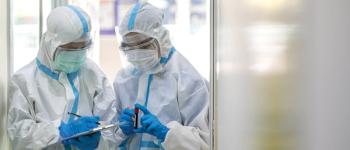
Supply chain issues are a larger, more systemic aspect of healthcare and national preparedness. Although IPs may not be able to fix them individually, there are ways we can ensure the safety of our hospitals.

Jenny Hayes, MSN, RN, CIC: “Asking the patient to wear a mask, which is something that we do in our facility, can be challenging at that point, especially as labor progresses, and you’re to the point of pushing. That right there offers a set of unique challenges for both the patient and the staff in the room.”

It will also be necessary to again train other professionals the way IPs have historically trained them about infection prevention, because a lot of the old rules had to be set aside when COVID-19 surged.
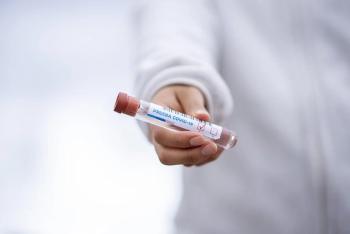
The U.S. government will pay Pfizer and BioNTech $1.95 billion upon the receipt of the first 100 million doses, following US Food and Drug Administration (FDA) authorization or approval. The U.S. government also can acquire up to an additional 500 million doses.

We have much work to do in terms of risk communication and awareness. This is a good example of how quickly exposures can happen in the workplace when we focus only on employee-to-customer interactions or healthcare worker-to-patient interactions.

Julie McKinney, PhD: “If you’re going to disinfect, you’re going to let it sit for three minutes and then you’re going to wipe it. If you’re going to sanitize, you only have to leave it for 30 seconds and then wipe.”
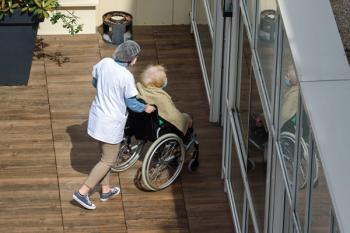
Infection control at LTCFs needs to be a balanced approach that addresses the risk of infection, and not just the treatment of infection. Money is saved when this approach is used.

After decades of reluctance to implement a national reporting system, when COVID-19 came along we witnessed almost overnight the formulation of case definitions and comprehensive national reporting from all healthcare facilities.
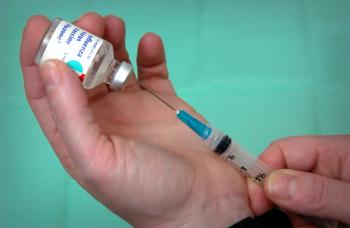
The trial, in which 1077 healthy adults in the UK are being assessing for the vaccine comprised of the ChAdOx1 virus for the prevention of SARS-CoV-2, shows enough promise for further assessment.

The Trump administration has decided that the COVID-19 data will no longer be reported to the US Centers for Disease Control and Prevention (CDC) through that agency’s National Healthcare Safety Network (NHSN).
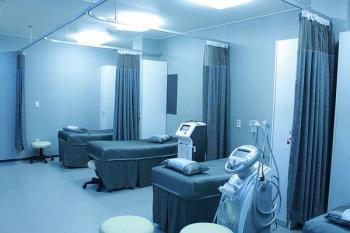
Charles Gerba, PhD: “I really think that in the future, what you really need is a specialist in infection control who understands both the environmental health services and also the professional staff that deals with the patients.”
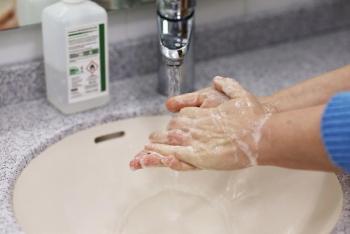
To enact social change such as better hand hygiene, only about 25% of a group needs to adopt the change and move the rest of the group forward.
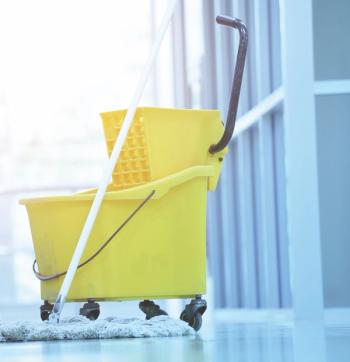
The swiftness and severity of the COVID-19 spread meant some hospitals were scrambling to adjust. Environmental services often led the way.
The filtering face piece respirators will be manufactured at General Motor’s facility in Warren, Mich. The company had to revamp its manufacturing process to accommodate making the respirators, creating four separate assemble stations.
An existing US Food and Drug Administration (FDA) approved anticoagulant called Heparin may lower the odds of SARS-CoV-2 infection.

One news item: Hospitals will now be reporting COVID-19 information to the National Guard instead of to the CDC through the TeleTrack system within the Department of Health and Human Services.
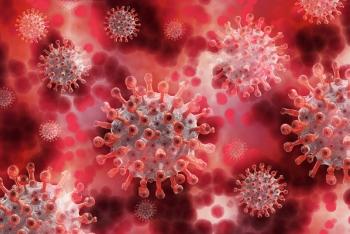
New findings show the vaccine candidate mRNA-1273, encoded with a stabilized prefusion SARS-CoV-2 spike protein, induced anti-SARS-CoV-2 immune responses in all of the trial’s participants, without any trial-limiting safety concerns identified.
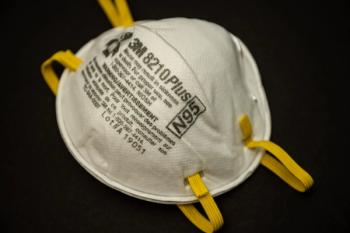
Harry Peled, MD: “I think for administrators and infection control people, the attitude has to be there is enough evidence that the wearing of N95s should be official. The claim that we’re going to wait for perfect evidence is just not tenable. We don’t do that for anything else in medicine.”
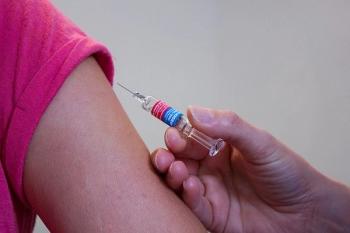
Mary Jean Ricci, MSN, RNBC: “There’s also the question of how do we encourage staff to get the vaccination, if there is a vaccination, for COVID-19? Currently, we have employees in facilities caring for patients who do not get the flu vaccine and don’t have a medical reason for not doing it…. I think that that’s a big area where infection control practitioners are going to have to focus their energy to encourage receiving the vaccination when this is over.”
Biopharmaceutical New Technologies (BioNTech) for the investigational vaccines BNT162b1 and BNT162b1. The vaccines are the result of a joint research venture between Pfizer and Biopharmaceutical New Technologies (BioNTech).
Up until now, the workers had to prove convincingly that they became infected on the job. But 16 states are now considering putting the onus on the hospital: Make it prove that the worker didn’t get the disease on the job.
