





Caitlin Stowe, CIC, MPH, CPHQ, VA-VC: “The cool thing about being an infection preventionists is that I call myself the jack of all trades, but the master of really none. Because you really have to know a little bit about everything.”
Caitlin Stowe, CIC, MPH, CPHQ, VA-VC: “The cool thing about being an infection preventionists is that I call myself the jack of all trades, but the master of really none. Because you really have to know a little bit about everything.”

IPs have not only that frontline experience, but also the ability to pivot and evolve with recommendations. In fact, our very jobs are about translating continuously evolving evidence and guidance into practice.
Data show none of the treated volunteers to develop COVID-19 experienced a severe form of the disease, versus 11 given placebo.

Faced with greater than three times the number of cases as the last surge, along with exponential growth with no end in sight, there is little hope healthcare workers can safely treat patients without a drastic change in policy and a more productive and secure supply line.

Investigators claim that their device can decontaminate N95s and surgical masks in the time it would take an infection preventionist to wash her hands.

Linda K. Groah, MSN, RN, CNOR, NEA-BC, FAAN: “Historically, we have not always had the best relationship. There’s been some competition between infection preventionists and OR managers or directors. The operating room has been that secret area behind the double doors.”
Michael Millenson: “When you dig a little deeper, you end up though with some questions. We’re a big country, and this is an enormous crisis. Well, $180 million? You can barely buy a couple of US senators with that.”

If you are an infection preventionist and are not currently involved in product review, now may be a great time to reach out to your supply chain team to explain the perspective you can bring to the table and ask to be involved.
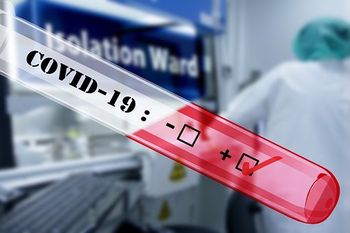
The ability to answer questions and explain why just yesterday we were doing something differently than today occurred fairly frequently because of the evolving nature of the pandemic.

Candida auris is difficult to identify with standard laboratory methods. It can be misidentified in labs without specific technology, which can lead to mismanagement.
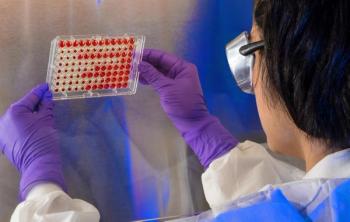
Bamlanivimab, a monoclonal antibody, can be used for anyone 65 or older. It can also be used for patients 12 and over who have an underlying health condition and have been diagnosed with mild-to-moderate COVID-19.
Fibi Attia, MD, MPH, CIC: “There is a daily meeting where we talk about the possibility of getting those COVID vaccines and where are we going to store them. How are we going to distribute them? How many doses do we need? Those kinds of things are being discussed on a daily basis.”

Investigators with Penn State Health note that since the institution’s first call with a COVID-19 patient on March 27, Penn State Health has completed 87% of contact tracing calls with patients who’d been infected by the coronavirus.
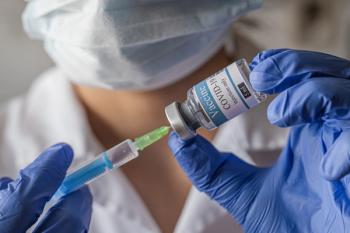
Susan R. Bailey, MD: “Vaccine hesitancy was a huge problem before the pandemic began and has certainly not gotten better since we’ve had COVID and now are looking forward to a COVID-19 vaccine.”
The company is still awaiting its threshold for total COVID-19 infections in its 44,000-patient assessment. Nonetheless, they believe they have made history.
The worst-case scenario is that if an effective and safe COVID-19 vaccine is found, a large segment of our population will elect to use hydroxychloroquine or another ineffective treatment instead, allowing the virus to continue to thrive, and devastate our nation.

Healthcare workers are vigilant about personal protective equipment (PPE), hand hygiene, and disinfection efforts in the hospital when managing COVID-19 patients. Too often, though, they let their guard down when they get home.
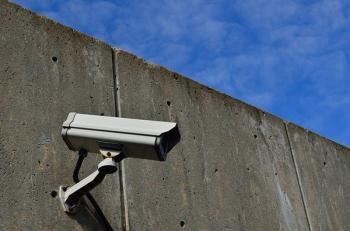
The odds of a viral outbreak such as SARS-CoV-2 in custodial settings, such as prisons and juvenile detention centers, are high. But video surveillance already in place in the facilities can enhance contact tracing.

Linda Spaulding: “Infection preventionists, put your tennis shoes on because over the next two months, we’re predicting to see a huge increase.... We have all the holidays coming up. You’re going to have cases from those. Hospitals have to be prepared.”
The MJH Life Sciences COVID-19 Coalition experts share their insights on the state of the pandemic.
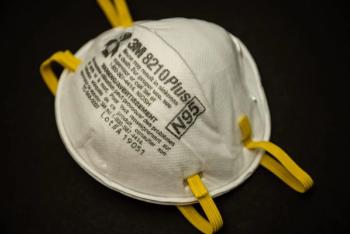
Ashish Diwanji: “The personal protective equipment made and sold in the US has to abide by the standards set up by NIOSH …. The PPE made and sold from China do adhere to the Chinese standards, but their standards are different than ours.”
“[T]here is a need for early education to enforce correct PPE use to alleviate personal risk concerns. This includes re-education of the donning and doffing of PPE to confirm staff are effectively protecting themselves. Data suggests substantial self-contamination risk occurs when doffing PPE….”
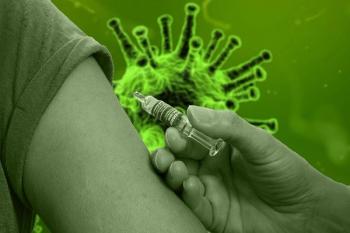
Kevin Kavanagh, MD: “Infection preventionists will need to make sure that they still have access to adequate PPE, even if the vaccine comes out [and they] really need to look at the experimental group that was used for the EUA.”
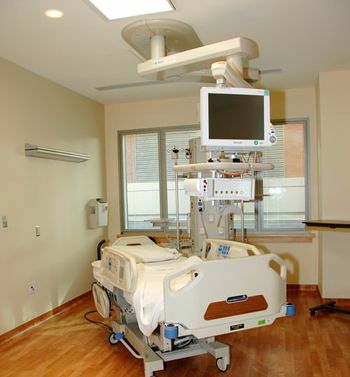
Michael Bell, MD: “The challenge that infection control professionals face has grown tremendously. We’re asking these individuals to not only be experts, but also to take responsibility for such a wide range of activities ... and finding ways to help them accomplish what they’re doing across the whole population of healthcare personnel is the rationale behind Project Firstline.”
CDC’s Jay Butler, MD: “It is critical that every healthcare worker in the United States has the training, information, and resources they need to protect themselves, their patients, colleagues, families, and communities from infections, and Project Firstline is designed to meet that need.”
