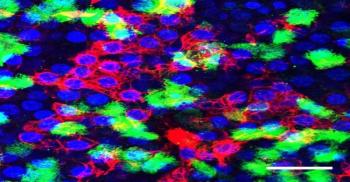
Researchers at the University of Illinois at Chicago have identified a molecular switch that causes immune cells called macrophages to clean up cellular debris caused by infections instead of contributing to inflammation and tissue injury.

Researchers at the University of Illinois at Chicago have identified a molecular switch that causes immune cells called macrophages to clean up cellular debris caused by infections instead of contributing to inflammation and tissue injury.

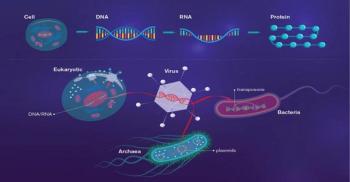
Comparing a living cell to a virus is a bit like comparing the Sistine Chapel to a backyard dog house. Lacking the intricate machinery of living cells, viruses represent biology stripped down to an extreme level. They are the true minimalists of the biological world.

Today, the Food and Drug Administration (FDA) announces it has cleared for marketing four previously cleared tests with new indications to aid in the diagnosis of Lyme disease. The tests cleared today are the first time that a test has been indicated to follow a new testing paradigm in which two tests called enzyme immunoassays (EIA) are run concurrently or sequentially, rather than the current two-step process in which a separate protein test called a Western Blot must be run after the initial EIA test.

Data from more than 12,000 multiple sclerosis (MS) patients formed the basis of a study by the Technical University of Munich (TUM) which investigated the population's vaccination behavior in relation to MS. It showed that five years before their diagnosis, MS patients were statistically less likely to receive vaccinations than comparator groups. Consequently, there was no positive correlation between vaccinations and the development of MS.

Cigarette smoke can make MRSA bacterial strains more resistant to antibiotics, new research from the University of Bath has shown.

The bacterial genus Mycobacterium has the dubious honor of including species responsible for two of the best-known chronic human infectious diseases: tuberculosis and leprosy. But unlike their more famous cousins, for which effective treatment strategies have long been available, it is the 200 or so lesser known Mycobacterium species that are currently causing a resurgence in pulmonary diseases in recent times.

The current leading method to assess the presence of viruses and other biological markers of disease is effective but large and expensive. It is prohibitively difficult for use in many situations, especially due to certain economic and geographic factors.

The world's food supply will become safer as the food industry shifts to high-resolution, whole-genome sequencing - which examines the full DNA of a given organism all at once. This move to make sequencing ubiquitous will lead to the consistently reliable detection of salmonella.

Researchers from Liverpool School of Tropical Medicine (LSTM), working alongside colleagues from the Wellcome Sanger Institute, Cambridge and the Big Data Institute, University of Oxford, have used whole genome sequencing to understand copy-number variants (CNVs) in malaria mosquitoes and their role in insecticide resistance.

Infections caused by the bacterium Vibrio vulnificus – known as “flesh eating” bacteria – are becoming more common in northern waters, whose surface temperatures are rising due to climate change. A recent study showed that infections are increasing in areas further north such as the Delaware Bay.

Scientists at Duke University have identified one kind of lung cell that can hustle to repair its damaged DNA and survive an attack of the influenza A virus while other kinds of cells around it die in droves.

Among HIV researchers, one seemingly indestructible HIV-like strain has earned the nickname "death star." That's due to the strain's reputation for killing off hopes for potential vaccines and immunotherapies that could prevent the disease.

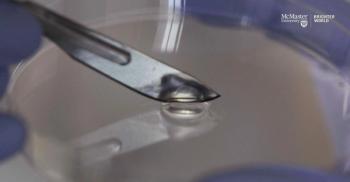
McMaster University researchers have developed a novel new gel made entirely from bacteria-killing viruses. The anti-bacterial gel, which can be targeted to attack specific forms of bacteria, holds promise for numerous beneficial applications in medicine and environmental protection.

McMaster University researchers have developed a novel new gel made entirely from bacteria-killing viruses.

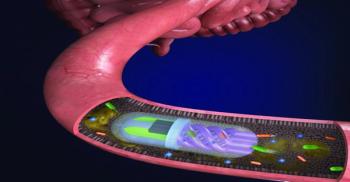
A research team led by Tufts University engineers has developed a 3D printed pill that samples bacteria found in the gut -- known as the microbiome -- as it passes through the gastrointestinal tract (GI).

As Lyme disease increases, researchers have taken a significant step toward finding new ways to prevent its transmission. The experts, who include a pioneer in Lyme disease discovery, have sequenced the genome of the animal carrying the bacteria that causes the illness.

A team of scientists led by Texas Biomed's Assistant Professor Smita Kulkarni, PhD and Mary Carrington, PhD, at the Frederick National Laboratory for Cancer Research, published results of a study that pinpointed a long noncoding RNA molecule which influences a key receptor involved in HIV infection and progression of the disease.

Getting up close - and a little dirty - with farm animals just might help us fend off illness, say researchers who've further demonstrated the benefits of early exposure to a wide variety of environmental bacteria.

Gay, bisexual and other men who have sex with men and transgender women with HIV, who are not in care, can be engaged in care when reached and connected with HIV treatment services, according to findings from a clinical trial supported by the National Institutes of Health.

Sepsis is a life-threatening condition that occurs when the body’s immune response to infection spirals out of control. Bacteria in the bloodstream trigger immune cells to release powerful molecules called cytokines to quickly activate the body’s defenses.

A UCLA-led research team has found that giving mice antibiotics for 10 days prior to a liver transplant leads to better liver function after the surgery.

Johns Hopkins Medicine and University of Alabama at Birmingham (UAB) researchers will lead a multicenter, multinational study of acute flaccid myelitis (AFM), the “poliolike” condition affecting children that causes loss of muscle control.

Researchers at the Icahn School of Medicine at Mount Sinai have developed a novel vaccine consisting of DNA and recombinant proteins composed of a portion of an HIV protein and another unrelated protein. This vaccine was tested in monkeys and was shown to induce antibodies similar to those associated with protection from HIV, the virus that causes AIDS.

Global warming may have played a pivotal role in the emergence of Candida auris, according to a new study published in mBio, an open-access journal of the American Society for Microbiology. C. auris, which is often multi-drug resistant and is a serious public health threat, may be the first example of a new fungal disease emerging from climate change.

The use of disinfectant wipes in hospitals is increasing; these wipes should be able to inactivate microorganisms including viruses on environmental surfaces and to prevent their transfer to clean areas.

The World Health Organization’s declaration that the year-long Ebola crisis is a Public Health Emergency of International Concern (PHEIC) is hoped to raise much-needed awareness and resources for preparedness and control efforts across the region, says the Infectious Diseases Society of America (IDSA).

Pneumonia resulting from exposure to Legionella -- although uncommon and affecting only 1 in 100,000 in Europe -- has a higher than 10 percent fatality rate

Scientists have found that mosquitoes are changing their hunting routines in response to host cues. For example, in Africa, mosquitoes now recognize when people emerge from bednets in the morning and have begun hunting more often during the day than at night.

First impressions are important -- they can set the stage for the entire course of a relationship. The same is true for the impressions the cells of our immune system form when they first meet a new bacterium.

Despite a large literature on surgical site infection (SSI), the determinants of prevention behaviors in surgery remain poorly studied. Understanding key social and contextual components of surgical staff behaviour may help to design and implement infection control (IC) improvement interventions in surgery.