
Northwell Health officials point out that their data showing the benefit of free testing and adequate supply of personal protective equipment come from healthcare workers who were on the frontlines of the COVID-19 pandemic in New York City.
Northwell Health officials point out that their data showing the benefit of free testing and adequate supply of personal protective equipment come from healthcare workers who were on the frontlines of the COVID-19 pandemic in New York City.

Mark Beeston: “Infection preventionists are a key component and a key gatekeeper in UVC technology and where it goes. Their recommendations are key and as clinical nurse leaders may be looking at providing additional tools, they want to consult with their infection prevention team.”

The concern is not only that COVID-19 significantly increases the burden to healthcare facilities during an already busy season, but that the potential for more testing in patients with non-specific respiratory virus symptoms could further strain testing capacity.
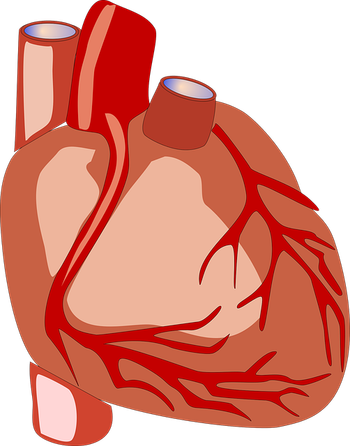
Taken together, the studies, published in JAMA Cardiology, say that the disease can possible cause long-term damage to the heart even in patients who exhibited only mild symptoms from COVID-19.

Jody Feigel, RN, MSN: “You find when you’re at home, you roll out of bed, you get your coffee, you immediately get on your computer, and you just work. When we’re at the hospital, we have a lot of interruptions and a lot of times they’re good interruptions, sometimes not so much. And we head out to see whatever fires need to be put out.”
Despite a clear record of violations across the country, amid a culture where sick staff were asked to show up for work, lawmakers in several states have also potentially disincentivized improvement of infection control standards in long-term care facilities by providing legal liability protections ahead of time.

A telework-ready infection preventionist is an IP who continues to support their facility if they also end up in quarantine. Teleworking like so many other aspects of nursing is something we just needed to jump into. No training, no guidebook, no manual.
Nancy Moureau, PhD, RN, CRNI, CPUI, VA-BC: “We see the competency of a vascular access specialist or team validated by the outcomes, by the level of infection with their patients, with other complications that may be present.”
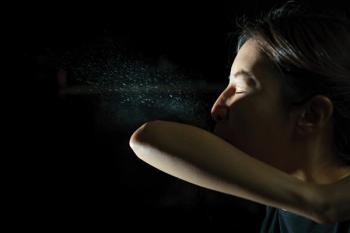
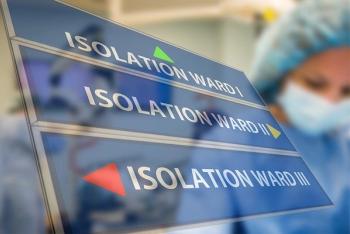
Many factors make the isolation precautions for diseases like COVID-19 more complex than typical droplet or airborne definitions.
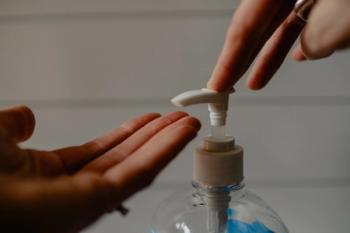
There’s been a sharp increase in sanitizers that claim to use ethanol, but instead have methanol—or wood alcohol—in them, according to the FDA.
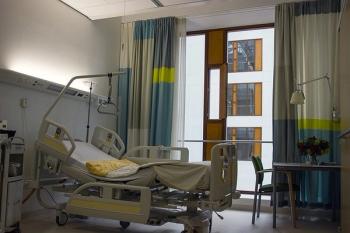
Maureen Spencer, RN, M.Ed.: “The World Health Organization did come out and said that they support the concept that this is droplet and airborne. And what that does is it changes our approach for infection prevention.”

With inadequate disinfection practices, healthcare workers are much more likely to acquire pathogens on their hands after touching these surfaces, potentially passing them on to patients.

As the pandemic seems not to abate, patients will start to present to the hospital after delaying crucial primary and preventive care visits, meaning sicker non–COVID-19 infected patients, with the potential for increased CLABSI and CAUTI rates.

Jenny Hayes, MSN, RN, CIC: “Asking the patient to wear a mask, which is something that we do in our facility, can be challenging at that point, especially as labor progresses, and you’re to the point of pushing. That right there offers a set of unique challenges for both the patient and the staff in the room.”

It will also be necessary to again train other professionals the way IPs have historically trained them about infection prevention, because a lot of the old rules had to be set aside when COVID-19 surged.
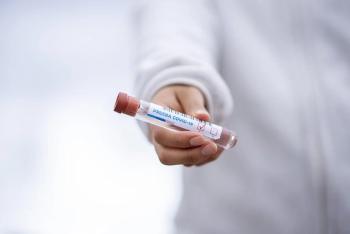
The U.S. government will pay Pfizer and BioNTech $1.95 billion upon the receipt of the first 100 million doses, following US Food and Drug Administration (FDA) authorization or approval. The U.S. government also can acquire up to an additional 500 million doses.
Julie McKinney, PhD: “If you’re going to disinfect, you’re going to let it sit for three minutes and then you’re going to wipe it. If you’re going to sanitize, you only have to leave it for 30 seconds and then wipe.”
Professional development educators and infection control specialists need to design educational programs that create a lasting behavior change when it comes to hand hygiene.
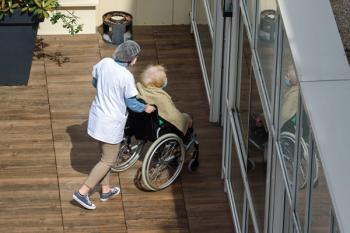
Infection control at LTCFs needs to be a balanced approach that addresses the risk of infection, and not just the treatment of infection. Money is saved when this approach is used.

The Trump administration has decided that the COVID-19 data will no longer be reported to the US Centers for Disease Control and Prevention (CDC) through that agency’s National Healthcare Safety Network (NHSN).
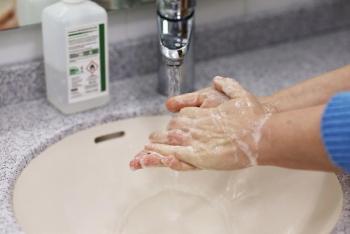
To enact social change such as better hand hygiene, only about 25% of a group needs to adopt the change and move the rest of the group forward.
The filtering face piece respirators will be manufactured at General Motor’s facility in Warren, Mich. The company had to revamp its manufacturing process to accommodate making the respirators, creating four separate assemble stations.
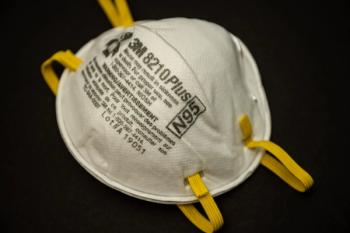
Harry Peled, MD: “I think for administrators and infection control people, the attitude has to be there is enough evidence that the wearing of N95s should be official. The claim that we’re going to wait for perfect evidence is just not tenable. We don’t do that for anything else in medicine.”
Biopharmaceutical New Technologies (BioNTech) for the investigational vaccines BNT162b1 and BNT162b1. The vaccines are the result of a joint research venture between Pfizer and Biopharmaceutical New Technologies (BioNTech).
Up until now, the workers had to prove convincingly that they became infected on the job. But 16 states are now considering putting the onus on the hospital: Make it prove that the worker didn’t get the disease on the job.
Brent James, MD: “Those practices and those hospitals have no choice. A number of them face going out of business, even with the loans the government's giving today.”
There is a desperate need to infuse SNFs with more resources, not only in terms of personal protective equipment, but also the critical infection prevention resources and staffing.
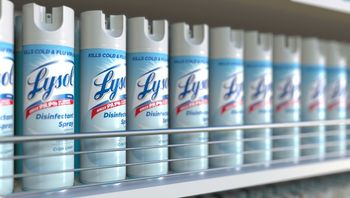
The Environmental Protection Agency (EPA) has approved Lysol Disinfectant Spray to combat SARS-CoV-2, the virus that causes coronavirus disease 2019 (COVID-19).

Sharon Ward-Fore, MS, MT(ASCP), CIC, says that non-healthcare companies need a lot of help following infection prevention and control guidelines. They may call on infection preventionists for that help.
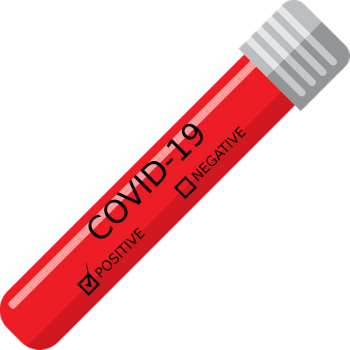
Kevin Kavanagh, MD, the founder of the patient advocaty group Health Watch USAsm, has been sounding the alarm about coronavirus disease 2019 (COVID-19) from the beginning. He tells Infection Control Today® that it might be time for pool or community testing.
