



Long-Term Care
Latest News
Advertisement
Latest Videos






CME Content


Advertisement
More News
Regulatory surveys in long-term care settings focus heavily on infection prevention, with F880 frequently cited. Facilities should ensure thorough infection control training for all staff and partners.

Take 5 minutes to catch up on Infection Control Today’s highlights for the week ending October 27, 2024.
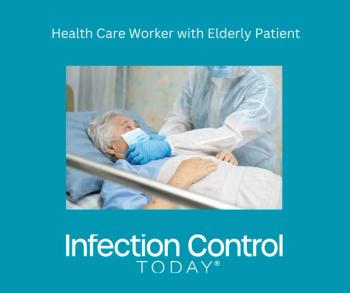
Research finds Enhanced Barrier Precautions reduce MDRO transmission in nursing homes, though challenges persist with gown usage, education, and comfort during high-contact care activities.
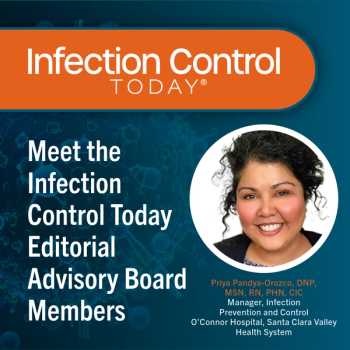
Meet the experts shaping infection prevention: Infection Control Today's Editorial Board members share insights, experiences, and cutting-edge strategies to enhance health care safety and quality. Meet Priya Pandya-Orozco, DNP, MSN, RN, PHN, CIC.
Watch ICT's discussion with Matthew Pullen, MD, at the various fungal infections, including Candidasis, aspergillosis, and many others. He also talks about his recent trip to the MSGERC Conference.

A recent study explores individual, organizational, and environmental factors influencing home care providers' adherence to facial protective equipment (FPE) to improve future pandemic preparedness.
Alesia McKeown, PhD, discusses the pivotal role of cutting-edge diagnostic technologies in enhancing infection prevention, especially in high-risk health care environments, during an interview with Infection Control Today.

Sean Brown’s 2024 Disease Prevention Summit presentation emphasized leveraging technology, prioritizing high-risk patients, and environmental surveillance to enhance infection prevention and control strategies.

A presentation at the Disease Prevention and Control Summit in Philadelphia, Pennsylvania, spoke about the rising threat of Candida auris.
As influenza and COVID-19 circulate in long-term care facilities, prompt testing, isolation precautions, and antiviral treatments are crucial for preventing outbreaks and protecting vulnerable residents.

Pharmacies, with their widespread locations and extended hours, have become vital access points for vaccinations, particularly in underserved communities. They provide convenience, education, and trusted health care services to millions across the US.
Enjoy this first installment of The Long-Term Care Chronicles With Robbie Hilliard, MSN, RN CIC, a column about managing special infection control situations in the long-term care patient population. This installment is about when 2 experts conflict about best care.
The 2024 surge in infectious diseases like mpox, measles, and meningitis demands a paradigm shift in control strategies, emphasizing expanded expertise, improved airborne precautions, and rethinking cost-effectiveness in healthcare to prevent future outbreaks and protect public health.

Maintaining team morale during financial instability and potential layoffs requires clear communication, emotional support, and professional development opportunities to reassure and retain valuable team members.

Communal dining in LTC facilities enhances social interaction and nutrition but requires infection prevention measures to protect residents from risks like gastrointestinal and respiratory infections.

Balancing personal struggles and professional responsibilities during crises requires self-awareness, self-compassion, healthy boundaries, and support networks. Embrace these strategies to navigate and overcome challenges.

Take 5 minutes to catch up on Infection Control Today®’s highlights for the week ending July 20, 2024.
In a follow-up to Infection Control Today's (ICT's) article on the CDC's Antimicrobial Resistance Threats in the US 2021-2022 release, Michael Craig, MPP, director of CDC's Antimicrobial Resistance Coordination and Strategy Unit, answers ICT's questions.
Check out Infection Control Today's PowerPoint that explains updates to the long-term care enhanced barrier precautions (EBP) requirements from the CMS.
The CDC reports today of a 20% increase in antimicrobial-resistant infections during COVID-19, in the years of 2021-2022, highlighting the need for ongoing prevention and updated estimates starting in 2025.

William Shutze, MD, FACS, discusses how infection prevention impacts vascular health, emphasizing key strategies and the role of vascular surgeons in maintaining vascular well-being.
Enhanced barrier precautions (EBP) in nursing homes are vital to prevent multidrug-resistant organism (MDRO) transmission, address antimicrobial resistance, and ensure resident safety and well-being.
Dry hydrogen peroxide (DHP) significantly reduces surface bioburden in long-term care facilities, enhancing infection control and lowering volatile organic compounds, as presented by Mary L. Cole, MS, RN, CNRN, CCRN, SCRN, CIC, at APIC24.
Certification in infection prevention and control is essential for career growth, higher salaries, and improved patient outcomes. Learn why certification matters from Shazia Irum, MSC, MBA, RN, CIC, CPHQ, CBIC Ambassador in Saudi Arabia.
Amid escalating multidrug-resistant organism threats, hospitals face business risks and patient trust erosion, necessitating improved cleaning and infection prevention practices.
Advertisement
Advertisement
Trending on Infection Control Today
1
Bug of the Month: The Quiet Guest in the Dust
2
What Is Effective Preparedness for Emerging Respiratory Viruses? Shazia Irum, MSC, MBA, RN, CIC, CPHQ, FAPIC, answers
3
Continuous Photohydrolysis Disinfection Cuts MDROs, COVID-19, and Hospital Transfers in Long-Term Care, Study Finds
4
Influenza D and Canine Coronavirus: Why Underrecognized Animal Viruses May Be the Next Respiratory Threat
5
