
News
Advertisement
Emerging infectious diseases comprise a substantial fraction of all consequential human infections. They have caused the deadliest pandemics in recorded human history, including the Black Death pandemic (bubonic/pneumonic plague; 25 million to 40 million deaths) in the 14th century, the 1918 influenza pandemic (50 million deaths), and the HIV/AIDS pandemic (35 million deaths so far).
Advertisement
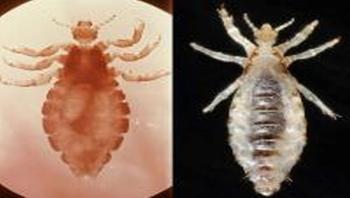
A new study seeks to determine how one parasitic species can give rise to two drastically different outcomes in its host: The human body louse (Pediculus humanus) can transmit dangerous bacterial infections to humans, while the human head louse (also Pediculus humanus) does not. A report of the new study appears in the journal Insect Molecular Biology.
Advertisement

On Dec. 18, 2013, the National Health and Family Planning Commission, China notified the World Health Organization (WHO) of two new laboratory-confirmed cases of human infection with avian influenza A(H7N9) virus. The first patient is a 62-year-old man from Guangdong Province. He became ill on Dec. 11, 2013 and was admitted to the hospital on Dec. 16, 2013. He is currently in critical condition. He has a history of exposure to live poultry. The second patient is 38-year-old man from Guangdong Province. He became ill on Dec. 9, 2013 and was admitted to the hospital on Dec. 18, 2013. He is currently in critical condition. The Chinese government continues to take the following surveillance and control measures: strengthen surveillance and situation analysis; reinforce case management and treatment; conduct risk communication with the public and release information; strengthen international collaboration and communication; and conduct scientific studies. Additionally an 80-year-old male reported earlier by the Centre for Health Protection (CHP), Hong Kong SAR, China died on Dec. 26, 2013. So far, there is no evidence of sustained human-to-human transmission. WHO does not advise special screening at points of entry with regard to this event, nor does it currently recommend any travel or trade restrictions. Source: WHO
Advertisement
Advertisement
Trending on Infection Control Today
1
Bug of the Month: The Quiet Guest in the Dust
2
Wellness vs Science in 2026: What Actually Prevents Infections—and What’s Just Hype
3
Triazoles vs Liposomal Amphotericin B Show Similar Survival in Invasive Aspergillosis Study
4
Manual Cleaning vs Automation: Achieving Consistent Cleanliness for Ultrasound Device Reprocessing
5
