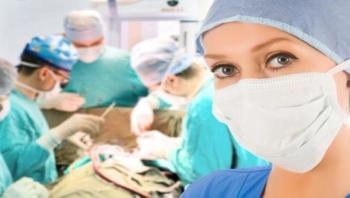
It is generally understood that police officers, firefighters, military professionals, stuntmen and women, wild animal trainers and racecar drivers accept the obvious personal risk that comes with their careers. Healthcare providers, however, do not typically think of themselves as thrill-seekers or extreme risk takers. Most nurses, physicians, surgical technologists, phlebotomists, lab technicians, radiologists and sterile processing professionals probably do not expect their lives to change forever because of an accidental jab with a contaminated hypodermic needle, suture needle, scalpel, retractor, or other sharp device. And yet, lives can be changed, literally in an instant. According to the Centers for Disease Control and Prevention (CDC), an estimated 385,000 percutaneous injuries (needle sticks, cuts, punctures and other injuries with sharp objects) occur in U.S. hospitals each year. CDC estimates that every day, more than 1,000 hospital-based professionals sustain an injury from contaminated needles and other sharp devices during the delivery of patient care. These injuries carry a risk of infection with dangerous and potentially fatal human immunodeficiency virus (HIV) and hepatitis B virus (HBV), among other pathogens. Of the HIV/AIDS infected healthcare professionals, most are nurses and laboratory workers, and most cases are contracted from percutaneous exposure.