News

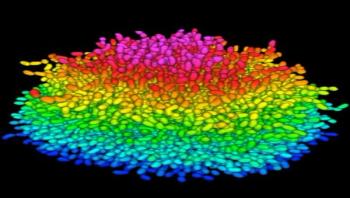
Princeton researchers have for the first time revealed the mechanics of how bacteria build up slimy masses, called biofilms, cell by cell. When encased in biofilms in the human body, bacteria are a thousand times less susceptible to antibiotics, making certain infections, such as pneumonia, difficult to treat and potentially lethal.
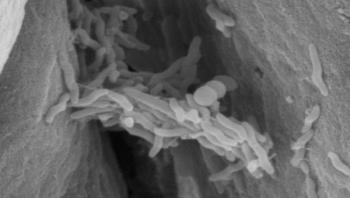
The HIV virus increases the potency of the tuberculosis bacterium (Mtb) by affecting a central function of the immune system. This is the conclusion of a study carried out by researchers at Linköping University in Sweden. The discovery helps to explain why infection with HIV greatly increases the risk that infection by Mtb will progress to active tuberculosis.

Five UCLA researchers were part of an international team that has used X-rays to reveal the structure of a molecule that is toxic to disease-carrying mosquitoes. The findings move the scientific world one step closer to genetically engineering a toxin that would be lethal to species that carry dengue fever and the Zika virus.

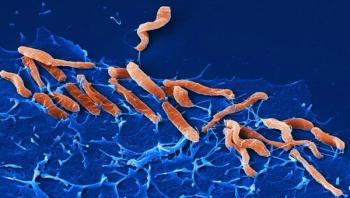
Helicobacter pylori is a spiral bacterium that can colonize the human stomach - sometimes with fatal consequences. A research group led by professor Markus Gerhard of the Technical University of Munich (TUM) and assistant professor Dr. Bernhard B. Singer of the Institute for Anatomy at the Faculty of Medicine of the University of Duisburg-Essen at Essen University Medical Centre has discovered a completely new approach to preventing or treating infections with this bacterium as well as secondary complications. This research was done in collaboration with the group of professor Han Remaut (VIB - VUBrussels, Belgium).

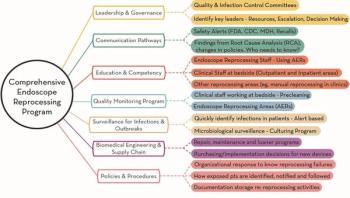
More than 10 million endoscope procedures are performed in the United States each year. There is no doubt that these medical devices have been a major advancement in the treatment of gastrointestinal diseases. It has been well published about the link between inadequately cleaned duodenoscopes and infections. More recently, several studies and media reports have linked outbreaks of multi-drug resistant organ-isms (MDROs) to these devices without any findings of reprocessing breaches.

Q:  We have always run the biological test (BI) in the morning immediately after the Bowie-Dick test to make sure we do not forget to perform the test. We run the test pack by itself. We recently had a survey and were cited because we did not run the biological test in the first working load. We have done the BI test this way for years and no one has ever said it was wrong. What is the recommended process?