
News
Advertisement
Advertisement

In this new series for 2017, we highlight insights from professionals in the healthcare community regarding how to foster communication and collaboration between infection preventionists (IPs) and key stakeholders. In this issue, Sue Barnes, RN, CIC, FAPIC, an independent clinical consultant and former national program leader for Infection Prevention and Control at Kaiser Permanente, provides her perspective on how IPs can best champion their programs to the C-suite at their healthcare institutions.

A steep increase of human cases of avian influenza A(H7N9) has been reported from China since the beginning of December 2016. During this wave, the number of human cases is already higher than during the last two waves in 2014-15 and 2015-16. The majority of recently reported human cases are associated with exposure to infected live poultry or contaminated environments, including markets where live poultry are sold. Influenza A(H7N9) viruses continue to be detected in poultry and their environments in the areas where human cases are occurring. In addition, the human cases are more geographically widespread and cases are also reported from rural areas, unlike in previous epidemics.
Advertisement
It's not only cold and flu season; it's also norovirus season. Norovirus typically peaks between December and April, and right now there are wide-spread outbreaks of norovirus cases throughout the United States, according to media reports.

It's that dreaded time of year - flu season. And we humans aren't the only ones feeling the pain. Dogs can get the flu, too. Scientists at the University of Rochester School of Medicine and Dentistry have developed, for the first time, two new vaccines for canine influenza. This research is not only important for improving the health of our furry friends, but for keeping us safe, too. Dogs that have been infected with multiple influenza viruses have the potential to act as "mixing vessels" and generate new flu strains that could infect people. This hasn't happened yet, but experts say it's possible.
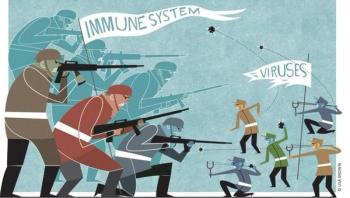
Scientists have discovered that a biological molecule important in cell growth (STAT3) is also critical in protecting us against infection - so much so that we would be unable to fight the common flu virus without it. Their discovery could pave the way to the development of new therapeutics charged with restoring our natural immunity to a whole spectrum of viruses that have evolved 'roadblocks' to the immune response.
The World Health Organization (WHO) offers the following information in a Q&A format to help individuals educate themselves about seasonal influenza and its prevention.


Soon in virtually every hospital it will be possible to identify the bacterial species responsible for an infection developing in a patient in a matter of just a few minutes. A new, easy-to-adapt and inexpensive analytical procedure has been developed by researchers from the Institute of Physical Chemistry of the Polish Academy of Sciences in Warsaw. The main role is played by innovative bioconjugates -- luminescent, magnetic microparticles coated with appropriately selected bacteriophages.

Taking a new approach toward tuberculosis therapy, a UCLA-led research team has devised a potential drug regimen that could cut the treatment time by up to 75 percent, while simultaneously reducing the risk that patients could develop drug-resistant TB.

New research indicates that people who had more infections as babies harbor a key marker of cellular aging as young adults: the protective stretches of DNA which "cap" the ends of their chromosomes are shorter than in adults who were healthier as infants. The findings, published Jan. 25 in the American Journal of Human Biology, shed new light on how the intricate interplay between genetics and environment impacts human health.
Advertisement
Advertisement
Trending on Infection Control Today
1
Continuous Photohydrolysis Disinfection Cuts MDROs, COVID-19, and Hospital Transfers in Long-Term Care, Study Finds
2
Bug of the Month: The Quiet Guest in the Dust
3
Influenza D and Canine Coronavirus: Why Underrecognized Animal Viruses May Be the Next Respiratory Threat
4
Dialysis Infection Risks and Prevention Strategies: A Q&A With NP Leader Octavia “Tavi” Schlueter, MSN, RN, CPNP-PC, PMHS
5
